What to Expect at a Yoga Nidra Workshop: A First-Timer's Guide
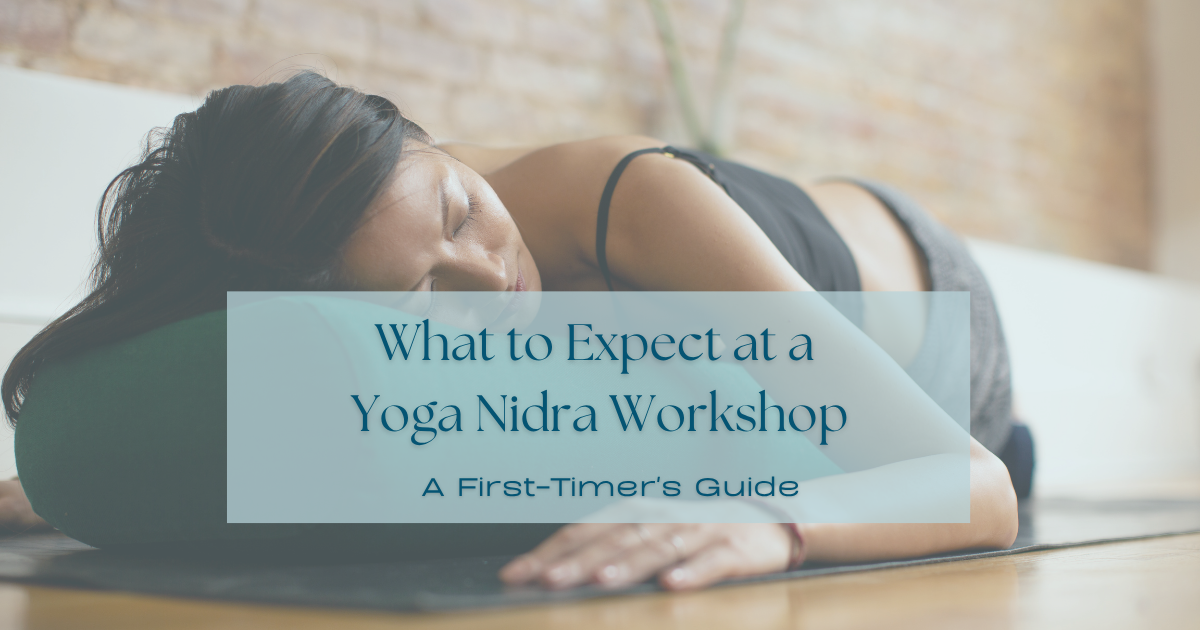
Yoga nidra is a guided practice done lying down, where you’re guided into a deeply relaxed state at the edge of sleep for around 30 minutes. Palestra's October 25 workshop with Jenn Shull pairs this with restorative yoga, and this guide covers exactly what to expect if you've never tried either.
If you've never done yoga nidra and the phrase "yogic sleep" is the only thing you've heard about it, you probably have questions — mostly some version of "wait, am I actually supposed to fall asleep?" Here's a practical answer to that and everything else, ahead of our October 25 workshop with Jenn Shull.
Do you actually fall asleep during yoga nidra?
No — yoga nidra is designed to keep you at the threshold between waking and sleeping, not to put you fully to sleep, though some people do briefly drift off, especially the first few times they try it. The practice typically guides your attention through the body, breath, and other points of awareness while you lie still, unlike meditation's more alert, seated focus and sleep's full loss of conscious awareness.
What actually happens physically during a session?
You'll lie down, fully supported by props like bolsters, blankets, and an eye pillow, while a teacher guides you through a scripted sequence — usually body awareness, breath awareness, and visualization — for an extended period, often 20 to 30 minutes. At Palestra's October 25 workshop, the 90-minute session begins with an active restorative yoga practice using supportive props, then transitions into a 30-minute yoga nidra savasana to close.
You won't be asked to move, hold poses, or do anything physically demanding once the yoga nidra portion begins — your only job is to stay present with the guidance while your body rests.
Why pair restorative yoga with yoga nidra instead of doing yoga nidra alone?
Restorative yoga's supported, still poses physically relax the body first, which makes it easier to settle into yoga nidra's deeper mental and nervous system release rather than fighting restlessness the entire time. Think of restorative yoga as loosening the physical grip, and yoga nidra as what becomes possible once that grip has started to release. Together, they can make it easier for some people to settle more fully into the yoga nidra portion.
What should I wear or bring to a yoga nidra workshop?
Wear comfortable, loose layers since your body temperature can drop once you're still for an extended period, and bring a light blanket or extra layer if you tend to get cold easily during relaxation practices. Most studios, including Palestra, provide props like bolsters, blankets, and eye pillows, but bringing your own favorite blanket is completely fine if that helps you settle in more easily.
What if I can't stop thinking during the practice?
That's a completely normal first experience — yoga nidra doesn't require you to stop thinking; it asks you to gently return your attention to the guidance whenever your mind wanders, the same way meditation works. Many people report that their mind is loudest during their very first session and quiets more naturally with repeated practice, so one session that feels "unsuccessful" mentally isn't a sign it doesn't work for you.
Is this appropriate for someone with zero yoga experience?
Yes — because yoga nidra and restorative yoga involve minimal to no active movement, this format is one of the more accessible entry points into yoga generally, even for people who've never taken a single class before. There's no flexibility requirement and no poses to "get right," which removes most of the intimidation factor that keeps first-timers away from more active styles.
Frequently Asked Questions
How long is Palestra's October 25 workshop? 90 minutes total, from 2:30–4:00 pm, including the restorative yoga portion and the 30-minute yoga nidra savasana.
Do I need to register in advance? Yes — space is limited, and you can reserve your spot on our workshops page.
Will I be lying on the floor the whole time? Yes, for the yoga nidra portion — you'll be fully supported with props, and the preceding restorative yoga portion also involves supported, mostly floor-based poses.
Is yoga nidra the same as guided meditation? They're related but distinct — yoga nidra specifically uses a structured body-and-breath awareness sequence and is traditionally done lying down, while guided meditation can take many forms and postures.
What if I fall fully asleep during the practice? It happens, and it’s not considered a failure. The practice is generally intended to keep you in a deeply relaxed state between waking and sleep, but drifting off briefly is common.
Ready to rest? Reserve your spot for our Restorative Yoga & Yoga Nidra workshop with Jenn Shull on Sunday, October 25, from 2:30 to 4:00 pm at Palestra Spa & Studio in SouthPark. Know someone who could use a little more rest this season? A Palestra gift card makes a thoughtful gift.