Hot Stone vs. Deep Tissue vs. Swedish: Which Massage Should You Book?
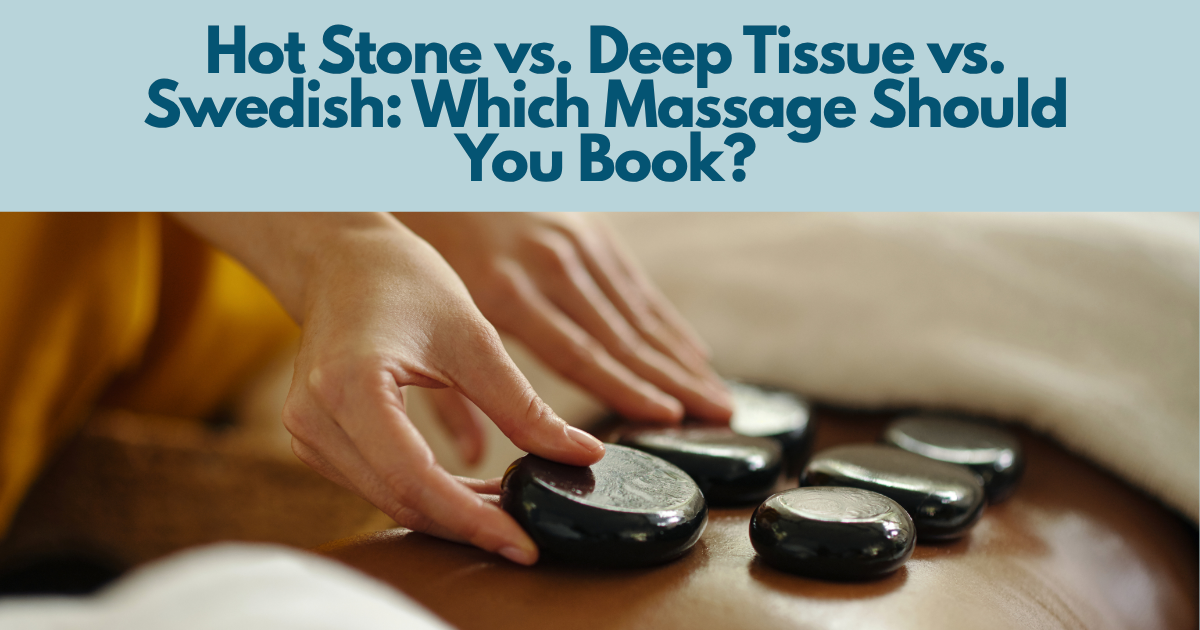
Hot stone massage uses heat to relax muscles before deeper work and suits general stress and cold-weather tension; deep tissue targets chronic, specific problem areas with more pressure; Swedish sits in between as a gentler, broadly relaxing option. The right choice depends on what your body actually needs this week, not which sounds most luxurious.
Standing in front of a spa menu, trying to decide between hot stone, deep tissue, and Swedish massage, is a little like ordering at a restaurant with no idea what any of the dishes taste like. Here's a straightforward comparison to help you actually choose.
What is hot stone massage best for?
Hot stone massage uses heated stones to warm and relax muscle tissue before or during manual work, helping the body settle into the session and making deeper pressure feel more comfortable for some people. Many people find the warmth helps them relax more deeply, eases general muscle tension, and leaves them feeling calmer and less anxious. For more on how the body holds and releases stress, read The Science of Letting Go.
This makes hot stone a strong choice for general stress, cold-weather tension, or when you want deep relaxation without the more intense pressure of pure deep tissue work — the heat does some of the "softening" work before your therapist's hands do. At Palestra, hot stones are included in our Palestra Signature Massage and can be added to many of our other massages.
What is deep tissue massage best for?
Deep tissue massage uses firm, sustained pressure to reach deeper layers of muscle and connective tissue, and it's the better choice when you have a specific, chronic problem area rather than general full-body tension. If you've had the same tight spot in your shoulder or lower back for months that lighter massage hasn't touched, deep tissue is built to work more directly on that adhesion or restriction, though it can feel more intense during the session itself.
The tradeoff is real: deep tissue is more targeted and can produce faster change in a stubborn area, but it's also more likely to leave you sore the next day than a lighter-touch option. To ease next-day soreness, pair your session with one of our Deep Stretch classes, which work well before or after a massage.
What is Swedish massage best for?
Swedish massage uses lighter, flowing strokes designed primarily for relaxation and circulation rather than big structural change, making it the gentlest of the three options and a good fit for first-time massage clients or anyone who wants stress relief without intense pressure. It's also a reasonable middle ground if you're not sure yet what your body needs — many people start here and layer in deep tissue or hot stone work in future sessions once they know their preferences.
How do I actually decide among the three?
Match the massage type to your specific goal: choose hot stone for general stress and cold-weather muscle tension, deep tissue for a specific chronic problem area, and Swedish for broad relaxation or a first massage experience. If you're still unsure, it's completely reasonable to call ahead and describe what you're feeling — a good massage therapist can help match you to the right approach before you even book. Booking with a partner? Our couples massage suites let you each choose the massage style that fits your body, side by side.
Can these be combined in one session?
Yes — many massage therapists blend techniques within a single session, for example, using warming or lighter Swedish-style strokes to prepare tissue before working more deeply on a specific tight area, rather than sticking rigidly to one modality for the full session. This is common practice and worth requesting if you know you have both general tension and one particularly stubborn spot. If you'd like to go beyond massage, our spa packages combine massage with facials and body treatments in one visit.
Frequently Asked Questions
Which massage type is best for chronic pain? Deep tissue is generally the better fit for chronic, localized pain, since it works more directly on deeper muscle and connective tissue than lighter techniques.
Is hot stone massage right for everyone? Not always. Heat may not be recommended during pregnancy or for people with certain conditions, such as diabetes, circulation issues, or sensitive skin. Let your therapist know about any health concerns before your session.
Will deep tissue massage hurt? It can feel more intense than lighter massage styles, and some soreness afterward is common, similar to how a hard workout might feel the next day — communicate your pressure tolerance with your therapist throughout the session.
Can I give a massage as a gift? Yes. A Palestra gift card can be used for any massage, including the Signature Massage with hot stones, and the recipient can choose the style when they book.
What should a first-time massage client book? Swedish massage is a reasonable, gentle starting point for anyone new to massage, since it introduces the experience without the more intense pressure of deep tissue work.
How often should I get a massage for ongoing tension? There is no single schedule that is right for everyone. Some people book monthly for general relaxation, while others may come more or less often depending on their goals, symptoms, and therapist’s recommendation.
Holiday shopping already? A Palestra gift card works for any massage, facial, body treatment, or yoga class, in any amount, and stays valid for a full year. It's an easy gift for anyone who could use a little more rest this season.