Why Your Skin Gets Drier in October (And What Actually Fixes It)
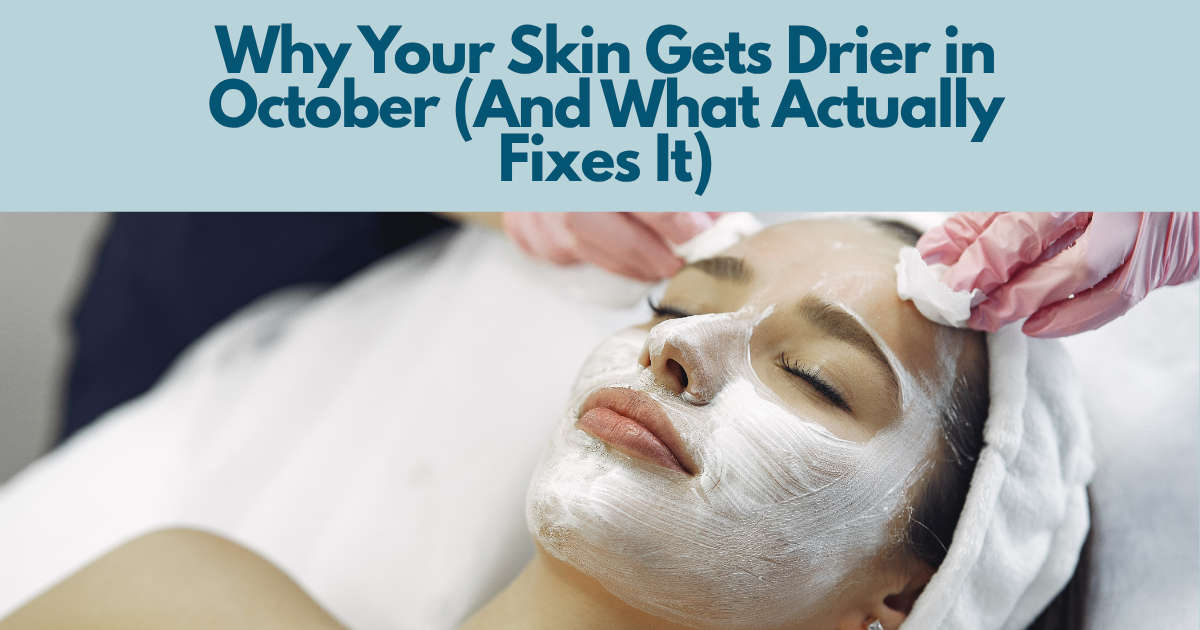
Cooler, drier autumn air pulls moisture from skin through a measurable process called transepidermal water loss, which research shows is significantly higher in fall and winter than summer. Hydrating, barrier-focused facials can help support skin through that seasonal shift, alongside a more protective at-home routine.
If your skin has started feeling tighter, flakier, or duller over the last few weeks without you changing your routine, it's not your imagination, and it's not really about your products failing. It's the season.
Why does skin actually get drier in the fall, physiologically?
Skin dryness increases in fall because lower humidity and temperature increase transepidermal water loss (TEWL)—the rate at which moisture evaporates from the outermost layer of skin—with research showing measurable seasonal differences in TEWL between colder and warmer months. As outdoor humidity drops and indoor heating kicks on, skin loses water faster than it can replace it, no matter how much you drink or how consistent your skincare routine is.
This isn't a minor seasonal footnote. One study of 80 healthy adults found lower levels of the skin's natural moisturizing factors in facial skin in winter than in summer, in the same people, along with changes in skin cells linked to dryness and irritation.
Is this the same thing that causes eczema flare-ups in colder months?
Related, yes — research has found that colder temperatures and lower humidity are associated with increased eczema-related flares and healthcare visits, and the same environmental mechanism (reduced humidity pulling moisture from skin) affects people without diagnosed skin conditions too, just less severely. If you already deal with eczema or another barrier-sensitive skin condition, fall and winter are reasonable times to be more proactive about skincare, not just reactive once symptoms appear. If you have eczema or rosacea, check with your dermatologist before trying new treatments.
Why doesn't just using more moisturizer fully solve this?
Heavier moisturizer can help, but seasonal dryness often responds best to a combination of hydration and barrier support rather than simply applying more of the same product. Research on seasonal skin changes has found changes in structural proteins like filaggrin, which helps maintain the skin barrier itself. That is why treatments that emphasize hydration and barrier support can be a useful complement to an at-home routine during this seasonal transition.
What should you actually do differently with your skincare in October?
Shift toward barrier-repair-focused treatments and products rather than simply adding more of what you were already using in summer — this means facials and skincare that emphasize hydration infusion and barrier support, alongside protecting skin from the temperature swings between heated indoor air and cold outdoor air that further stress the skin's surface. Layering products that trap moisture (occlusives) over hydrating serums tends to work better than relying on one product type alone.
Which facial types actually target this seasonal shift?
Facials that combine deep hydration with barrier support—like oxygen infusion paired with hydrating serums, or treatments designed around moisture restoration—are a better match for fall's dryness than exfoliation-heavy treatments alone, since aggressive exfoliation on an already compromised barrier can worsen sensitivity. That's why we recommend shifting toward hydration-focused options as the season changes, like our Sothys Hydrating Intensive Treatment, a Classic or Palestra Hydrafacial, or the Zemits Facial with oxygen infusion, rather than sticking with whatever worked for oilier summer skin.
Frequently Asked Questions
Is fall skin dryness the same for everyone, or does it depend on skin type? Everyone's skin barrier is affected by the same drop in humidity and temperature. Still, people with already-compromised barriers (eczema, rosacea, very dry skin types) tend to notice it more severely and sooner.
Should I switch my entire skincare routine for fall, or just add products? A full switch usually isn't necessary — layering in more hydrating, barrier-supporting products alongside your existing routine, and reducing harsh exfoliation, is typically sufficient.
Does indoor heating make fall skin dryness worse? Yes — indoor heating further reduces ambient humidity, compounding the moisture loss already happening from cooler outdoor air, which is part of why symptoms often worsen once heating systems turn on for the season.
How quickly can a facial improve fall-related dryness? Many people notice improved hydration and texture within a day or two of a hydration-focused facial. However, maintaining results typically requires ongoing at-home care and periodic treatments through the season.
Is dermaplaning a good choice for dry fall skin? Dermaplaning removes surface buildup and leaves skin smoother. Our Dermaplane Facial follows it with an enzyme peel and collagen treatment, and for very dry or sensitive skin, your esthetician may suggest pairing it with a hydration-focused facial.
Ready to give your skin some fall support? Book a hydrating facial at Palestra Spa & Studio in SouthPark. Know someone whose skin could use it too? A Palestra gift card makes an easy seasonal or special gift.