Whole Body Reset at Palestra: Pelvic Floor, Posture, and Nervous System Support

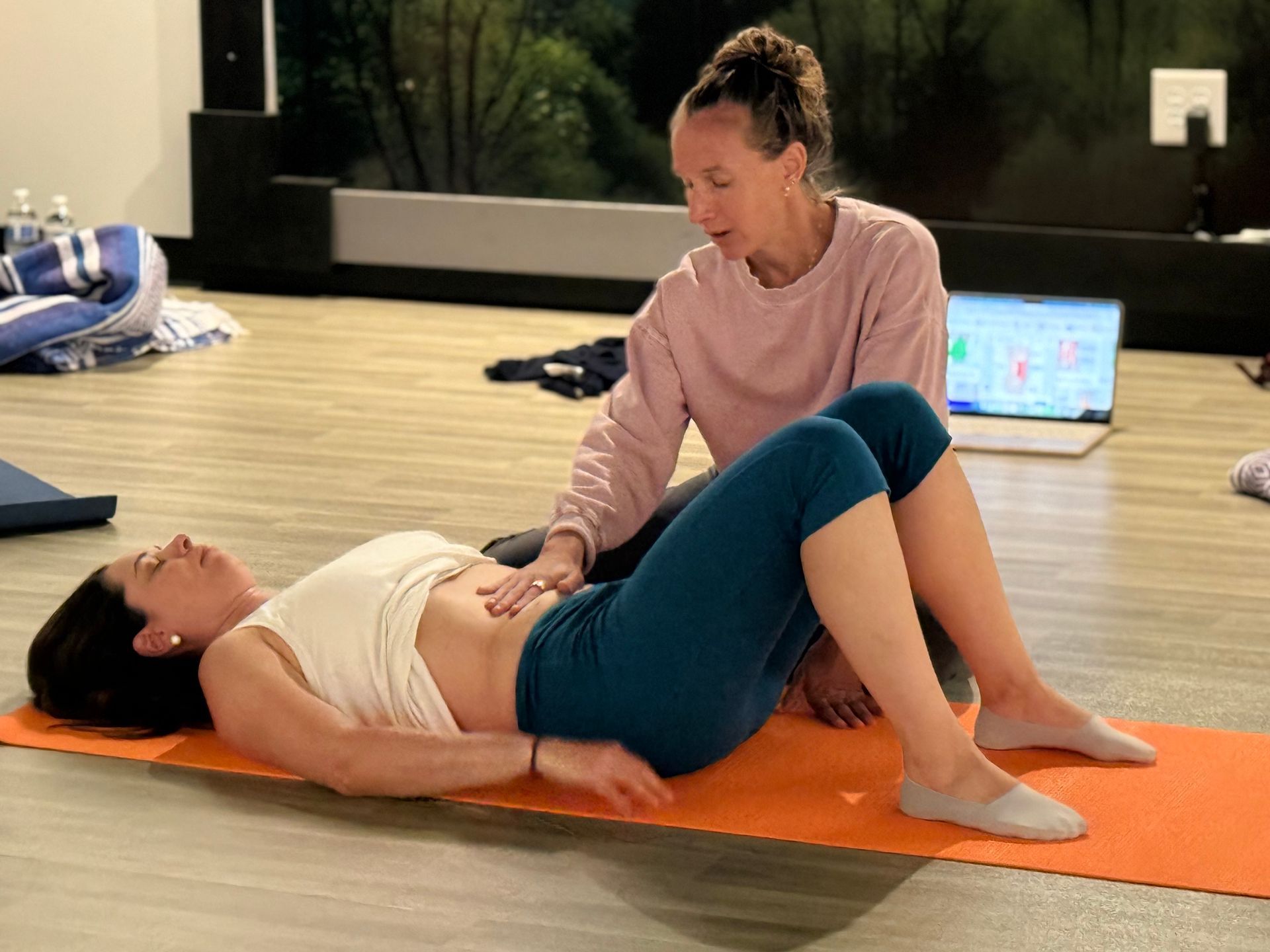
On Saturday, May 30, fifteen women joined us at Palestra Spa & Studio in SouthPark for a special Whole-Body Reset workshop focused on posture, pain, and pelvic floor health. For 90 minutes, we explored how spinal alignment, muscle tension, pelvic floor function, and the nervous system work together in real bodies and real life.
Most of the afternoon focused on pelvic floor education and nervous system regulation, with support from our friends at Primary Spine Institute for the structural and postural component. Together, Equipt Women’s Health & Wellness, Palestra, and Primary Spine Institute offered a collaborative, no-pressure space to learn, ask questions, and try simple practices.
Why We Hosted This Workshop
Many of the women we see are dealing with recurring low-back pain, hip discomfort, leaking, or a general sense that their posture is “off,” but they are unsure where to start. We created this workshop to connect the dots among the spine, pelvic floor, muscles, breath, and stress, so participants can finally see the full picture of what their bodies are carrying.
Our promise was simple.
Offer clear education, provide gentle, easy-to-repeat practices at home, and give transparent next-step options to anyone who wants more individualized care, for each provider.
A Quick Look at Spine and Posture with Primary Spine Institute
To lay the foundation, Primary Spine Institute explained that spinal alignment and posture can either support the body or keep it in a stressed pattern. They also explained that posture is not a perfect, frozen position but a living, changing relationship among your spine, muscles, and daily habits.
The Heart of the Afternoon: Pelvic Floor and Core with Equipt
Most of the workshop was led by Dr. Kerry McLaughin from Equipt Women’s Health & Wellness, who guided the group through a deep yet accessible exploration of pelvic floor health. She broke down what the pelvic floor is, where it is located in the body, and how it functions as part of a larger core system that includes the diaphragm, deep abdominals, and back muscles.
Kerry emphasized that the goal is not to have a pelvic floor that is always tight or always relaxed.
What we really want is a responsive, adaptable pelvic floor that can engage when needed and relax when it is safe to do so.
She also highlighted that pregnancy, childbirth, surgery, chronic stress, and prolonged sitting can all affect pelvic floor function. From leaking and urgency to heaviness, pain, or instability, many symptoms women quietly normalize are invitations to seek support. Instead of just talking about anatomy, Kerry invited everyone to gentle, awareness-based practices that could be done fully clothed and at their own comfort level. Participants explored how the pelvic floor responds to the breath, noticing subtle changes with each inhale and exhale.
The group practiced distinguishing between bracing and soft, coordinated activation.
Small visualizations and cues helped women experience what “supportive engagement” feels like, compared with the gripping many of us hold without realizing it. These practices were intentionally simple so attendees could recreate them at home without equipment.
Q&A: Real Questions from Real Women
The session ended with an open Q&A featuring Kerry, along with the Palestra and PSI teams.
Questions ranged from “How do I know if my pelvic floor is too tight or too weak?” to “What is the best first step for recurring back pain that keeps coming back even after massage or chiropractic?” The throughline in every answer was this. Your experience is valid, you are not alone, and you do not have to self‑diagnose or figure it out in isolation. We encouraged each woman to choose one or two next steps that felt doable.
Our Biggest Takeaways
A few themes emerged that are worth repeating.
- Pain and posture are rarely about just one structure in the body.
- The pelvic floor is intimately connected to your breath, spine, and nervous system.
- Tiny, repeatable practices are more powerful than occasional big efforts.
- Building a small team around your body can create more momentum and less frustration.
Above all, the afternoon confirmed how much women benefit from spaces where they can talk openly about pelvic health, pain, and stress without shame.
If You Want to Explore This Work
If the ideas from this workshop resonate with you, here are a few ways to take the next step:
- Connect with Equipt Women’s Health & Wellness to explore pelvic floor and women’s health physical therapy.
- Reach out to Primary Spine Institute if you suspect structural or postural contributors to your pain and want a more detailed assessment.
- Visit Palestra Spa & Studio to experience restorative classes, yoga, and spa services that support your nervous system and overall well‑being.
You are allowed to feel supported in your body. You do not have to wait until things are “really bad” to ask questions, seek help, or build a team around your health.