Sound Baths, Yoga Nidra, and Deep Stretch: The Calm‑First Classes Your Nervous System Has Been Looking For
There is a particular kind of tired that does not get better with coffee or a quick workout. Your body feels heavy, your mind races at night, and even when you have “free time,” you are not sure how to actually rest.
If this sounds familiar, you are exactly who Palestra’s calm‑first classes were designed for. Sound baths, yoga nidra, and deep stretch are three different doors into the same room: a more regulated nervous system.
Sound Baths: Let the Sound Do the Work
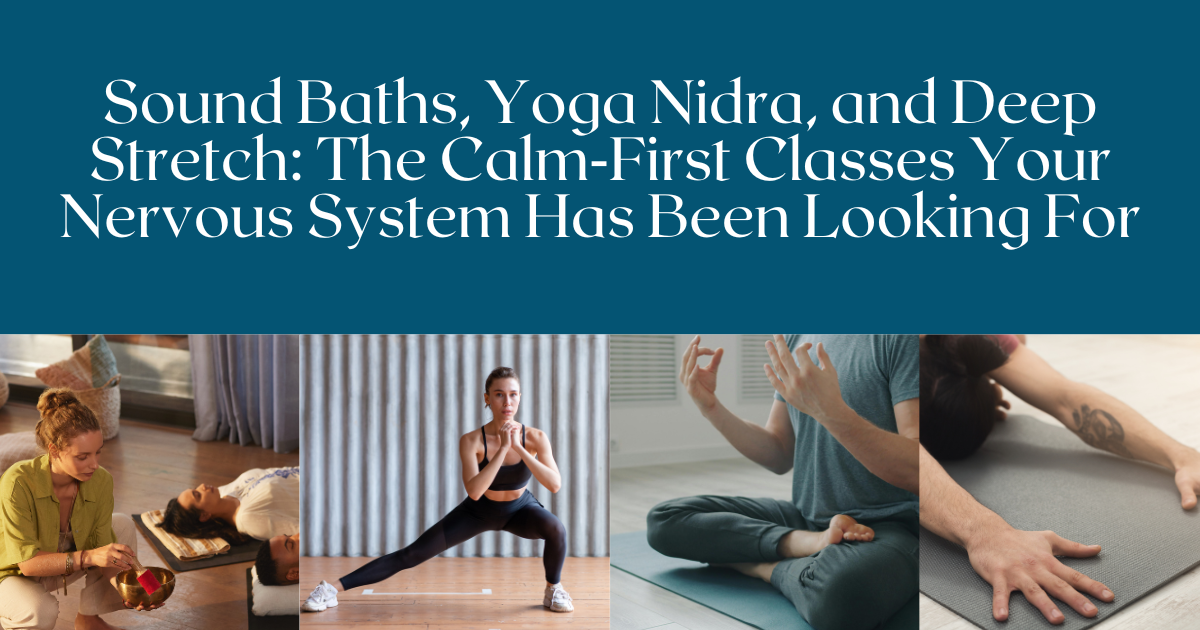
A sound bath is a guided rest experience where you lie in a comfortable position while a practitioner plays instruments such as crystal bowls, chimes, and gongs. The goal is not to analyze the sounds or “do it right.” The goal is to receive.
At Palestra, a typical sound bath looks like this:
- You arrive a few minutes early and set up a cozy nest with a mat, bolsters, blankets, and an eye pillow.
- The practitioner explains what will happen so there are no surprises.
- You lie back in supported savasana and allow the waves of sound to wash over you.
- There may be a guided relaxation or visualization, but no movement is required.
Many people describe feeling as if they “took a nap without fully falling asleep,” waking up feeling clearer, softer, and less triggered by everyday stress.
Ideal for:
- Overthinkers and anxious minds.
- People who have trouble meditating in silence.
- Anyone who is “too tired to move” but knows they need a reset.
Yoga Nidra: Rest Deeper Than Sleep
Yoga nidra, often called “yogic sleep,” is a guided practice done entirely lying down. Unlike regular sleep, your mind stays lightly aware while your body enters a deeply restorative state.
In a nidra session at Palestra:
- You lie on your back or side, supported by blankets and bolsters.
- A teacher leads you through a structured script that might include body scanning, breath awareness, imagery, and intention setting.
- You are encouraged to remain still, but you can always adjust if needed.
Thirty to forty minutes of yoga nidra can feel like hours of rest for your nervous system. It is especially supportive if you struggle with insomnia, chronic pain, or burnout.
Ideal for:
- People who wake up tired even after a full night’s sleep.
- Those who feel “wired but tired.”
- Anyone curious about meditation but intimidated by sitting upright in silence.
Deep Stretch: The Bridge Between Movement and Rest
Deep stretch is where yoga, mobility work, and restorative practices meet. Instead of flowing quickly from pose to pose, you spend longer periods in supported shapes that target big muscle groups.
In a deep stretch class at Palestra, you can expect:
- Floor‑based poses supported with blocks, straps, and bolsters.
- Longer holds (sometimes several minutes) with a focus on breath and sensation.
- Clear options and props to make each pose accessible.
- A calm, unhurried pace with quiet music.
This style is particularly helpful if your body feels chronically tight from sitting, driving, or intense workouts, but you do not want a high‑intensity yoga class.
Ideal for:
- Athletes and weekend warriors.
- Desk workers and commuters.
- Anyone who wants to “do something” with their body without pushing.
How To Know Which Practice You Need Today
When you are exhausted, even choosing a class can feel like work. Use this quick check‑in:
- “My body feels like concrete.”
- Start with a deep stretch. You need slow movement and opening.
- “My mind will not turn off, even when my body is tired.”
- Choose yoga nidra. Let a guided script walk your mind toward rest.
- “I want to feel held by something outside myself.”
- Opt for a sound bath. Let vibration and sound do the heavy lifting.
You cannot choose “wrong.” All three practices are designed to move you toward the same destination: less reactivity, more ease.
A Weekly Calm Plan for SouthPark Life
If you are ready to experiment, here is a simple way to build these practices into your week:
- Monday: Deep stretch to unwind from weekend activities and reset your posture for the week.
- Wednesday or Thursday: Short yoga nidra session to interrupt the midweek grind.
- Friday evening: Sound bath to close the workweek and create a softer landing into the weekend.
Even one class a week can make a noticeable difference. Over time, many people report reacting less intensely to stressors and recovering more quickly when life gets loud.
Your Nervous System Will Thank You
You do not have to earn rest by hitting a certain step count or crossing everything off your list. Rest can be the first step, not the reward.
If your body is calling for a different kind of support, you are welcome to step into Palestra’s calm‑first classes. Bring your tired mind, your tight muscles, and your skeptical questions. Leave with a nervous system that finally remembers what ease feels like.