Back-to-Fall Reset: Why September (Not January) Is the Real Turning Point for Your Wellness Routine
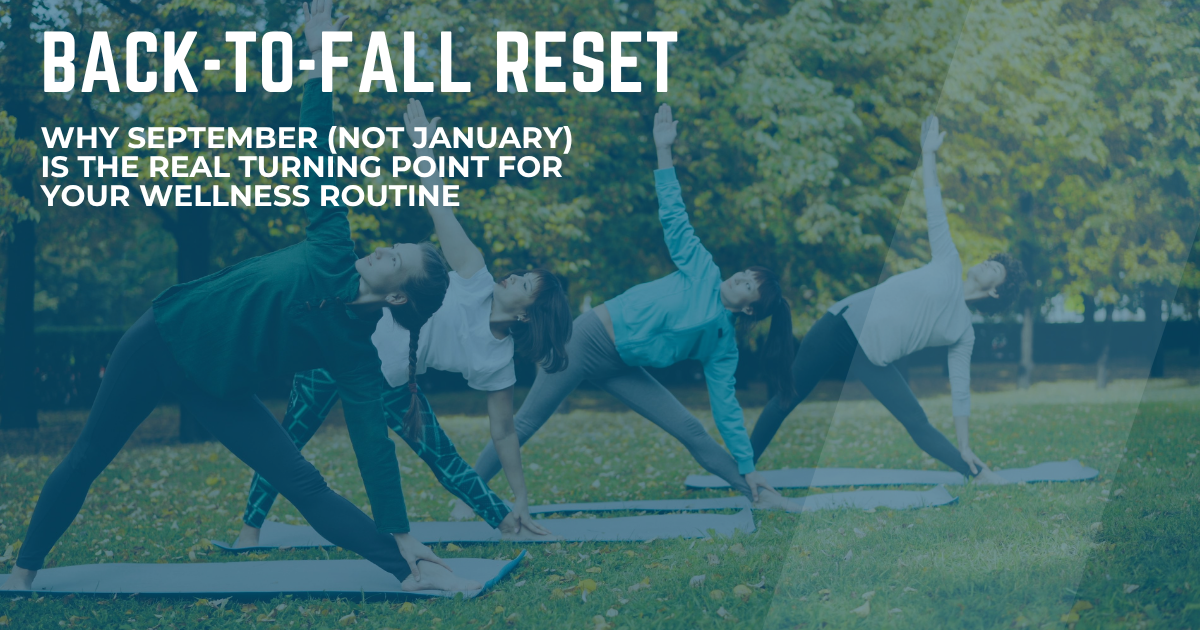
Every January, wellness culture tells you this is the moment to transform your routine. Most of those resolutions don't survive February. September quietly offers something better: a natural turning point without the pressure, arriving right as the autumnal equinox on September 22 marks the actual first day of fall.
Why is September a better reset point than January?
September works better than January because it arrives without the all-or-nothing pressure of a New Year's resolution, and because the practical chaos of a new school year has usually settled into routine by the second or third week of the month. Instead of a dramatic "new year, new me" mindset that tends to collapse under its own intensity, September offers a quieter, more sustainable question: what does my body actually need right now, heading into fall?
This isn't just a mindset reframe — it maps onto something real. The fall equinox on September 22 marks an actual seasonal transition, giving September a natural symbolic weight that late-December resolutions, made in the middle of holiday chaos, don't have.
What does a sustainable reset actually look like, compared to a dramatic one?
A sustainable reset means choosing one supportive practice and maintaining it consistently for several weeks, rather than overhauling your entire routine at once and abandoning it when the intensity becomes unsustainable. Consistency is generally more sustainable than sudden, dramatic change. A twice-weekly yoga practice you can maintain for a month may do more for your overall wellbeing than an ambitious daily routine you abandon after two weeks.
This is the same principle behind why crash diets and extreme fitness challenges can be difficult to sustain — consistency is often more realistic than short bursts of intensity.
What's a realistic way to start a fall reset?
Start with one practice, not five: choose a single class, treatment, or ritual that feels supportive rather than like an additional obligation, and commit to it for about four weeks before adding anything else. That might mean two yoga classes a week, a standing Friday evening Sound Bath, or a monthly massage — the specific choice matters less than the consistency behind it.
At Palestra, September is a particularly easy month to start this because it's also National Yoga Month, which means the $59 unlimited first month offer lines up perfectly with this seasonal reset window — one accessible way to test a consistent rhythm without a large upfront commitment.
How does the change of season actually affect your body?
As daylight hours shorten heading into fall, many people notice shifts in energy, sleep, and mood that are physiological responses to seasonal light changes, not just a change in mindset. This is part of why a fall reset benefits from practices that support nervous system regulation specifically — restorative yoga, sound therapy, and bodywork — rather than purely high-intensity fitness goals aimed at compensating for summer.
Instead of fighting the seasonal shift, working with it — slowing down, prioritizing recovery, choosing steadier rhythms — tends to produce a routine that actually survives past October.
What role do spa treatments play in a fall reset, alongside yoga?
Spa treatments like massage and facials support a fall reset by giving the nervous system direct, restorative touch input that complements the active regulation yoga provides, rather than functioning as a separate indulgence. As the interplay between movement and restoration described elsewhere in Palestra's wellness philosophy makes clear, these aren't competing forms of self-care — they reinforce each other, especially heading into a season that naturally asks for more rest.
A simple fall rhythm might include a Monday morning class to start the week grounded, a Friday evening Sound Bath to release what accumulated, and a monthly massage or facial to support ongoing recovery.
Frequently Asked Questions
Why does September feel like a better time to start a routine than January? September lacks the pressure and chaos of New Year's resolutions, and it coincides with school schedules settling and the actual fall equinox, giving it real seasonal significance rather than an arbitrary calendar date.
How long should I commit to a new practice before deciding if it's working? About four weeks is a reasonable window — long enough for your nervous system to register a pattern, short enough that it doesn't feel overwhelming if adjustments are needed.
Should I start with yoga, massage, or something else? Start with whichever practice feels most immediately accessible and least like an obligation; consistency in one area matters more than choosing the "correct" starting point.
Is it normal to feel more tired or less motivated as the seasons change? Yes — shortened daylight and seasonal transitions produce real physiological shifts in energy and mood for many people, which is a reason to build in more restorative practices, not a personal failing.
What's the easiest way to try a new practice at Palestra this September? The $59 unlimited yoga first month for new students is designed as a low-commitment way to test a consistent practice during National Yoga Month.