Reiki in SouthPark: How Energy Healing Supports Nervous System Regulation at Palestra
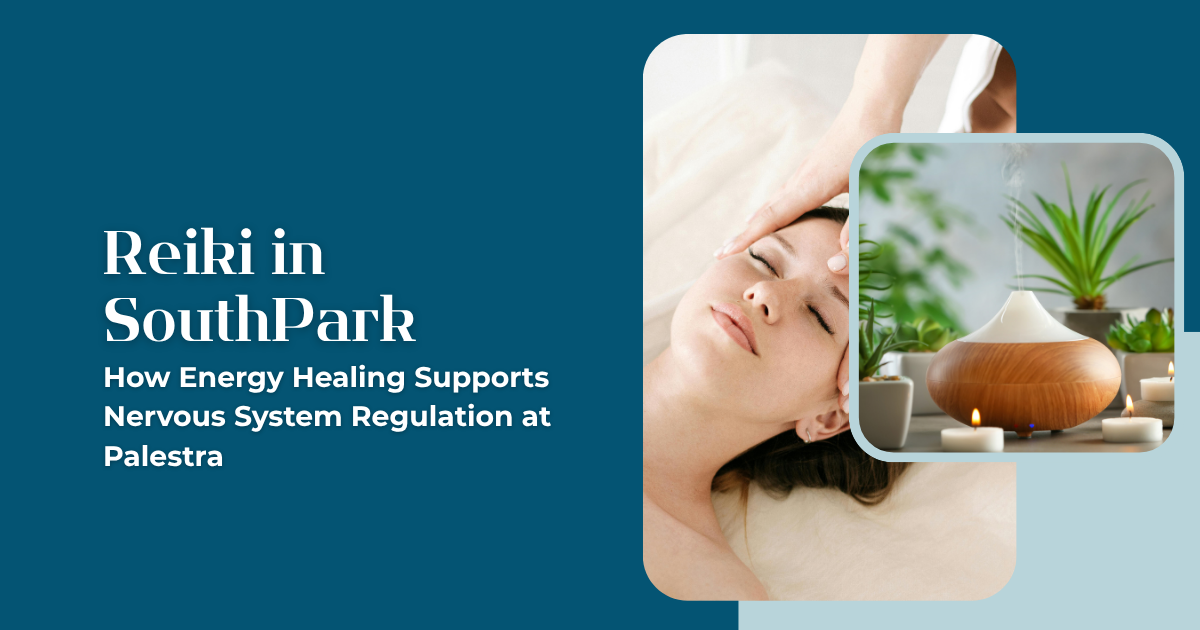
Modern stress rarely gives you a clear endpoint. It accumulates through constant notifications, subtle worries, and the invisible load of trying to care for everyone around you. Even when you sit still, your mind often continues racing. Reiki offers a different kind of reset—one that works with subtle energy patterns, nervous system regulation, and your body’s innate capacity to heal.
Reiki is a gentle, hands-on or hands-near energy practice that invites your system into deeper states of rest and balance. Rather than manipulating muscles or guiding movement, the practitioner focuses on channeling calming energy while your body does the integrating. Many people describe sessions as feeling warm, spacious, and surprisingly grounded, even though they’re simply lying still and receiving.
How Reiki Speaks to the Nervous System
Your nervous system constantly scans for cues of safety or threat, often below conscious awareness. When you’re in a quiet room, supported on a comfortable table, and held in non-judgmental presence, those cues shift dramatically. Many people experience Reiki as deeply relaxing, helping them settle into the kind of calm associated with the body's rest-and-digest response.
When people experience a greater sense of safety and relaxation, the body can begin shifting away from a stress response and toward restoration. Reiki sessions often lead to:
- Deep relaxation beyond what typical rest provides
- Gentle release of emotional tension that may have been stored physically
- Subtle shifts in breathing patterns and heart rate that support long-term resilience
Unlike high-intensity interventions, Reiki doesn’t demand effort from you. Your role is to receive. This receptive posture is increasingly rare in modern life, where productivity and performance often overshadow restoration.
Reiki as Part of Integrated Wellness
At Palestra, Reiki doesn’t exist in isolation. It’s woven into a broader approach that pairs movement, manual therapy, and nervous system-focused practices. When combined intentionally, these modalities create synergy:
- Yoga prepares your body and mind to receive energy work by increasing awareness and softening physical tension
- Massage addresses muscular and fascial patterns, supporting the body's overall sense of ease and relaxation
- Sound baths and meditation classes support integration, helping your nervous system stabilize newly accessed states of calm
For some clients, Reiki becomes the anchor around which other practices revolve. For others, it’s a periodic tune-up that helps reset patterns after periods of intense stress or life transitions.
What to Expect in a Reiki Session
Reiki sessions at Palestra are designed to feel safe, unhurried, and deeply restorative from the moment you enter the room. After a brief check-in to understand your needs—whether stress relief, emotional support, or general recalibration—you’ll lie fully clothed on a treatment table, supported by pillows and blankets as needed.
The practitioner places hands lightly on or just above specific areas of the body, often beginning at the head or shoulders and gradually moving toward the torso, legs, and feet. There is no pressure, manipulation, or stretching. Instead, you may notice sensations such as warmth, subtle tingling, or the feeling of energy moving or softening in certain areas.
It’s common to drift into a meditative or sleep-adjacent state during Reiki. This isn’t a sign of disengagement. Many people find it reflects how relaxed and at ease they feel during the session. After the session, many people report feeling lighter, clearer, or more connected to themselves, often with improved sleep and reduced irritability in the days that follow.
Who Reiki Serves
Because Reiki is gentle and non-invasive, it’s suitable for a wide range of people and life circumstances. It can support:
- Those navigating chronic stress who feel “wired but tired”
- Individuals dealing with transitions such as pregnancy, postpartum, or menopause
- People exploring spiritual or emotional growth who want a space to process and receive
- Anyone seeking a complement to more physical modalities like yoga, massage, or facial treatments
Wellness is increasingly about helping the body feel safe enough to heal rather than pushing it to perform. Reiki reflects this shift perfectly. It’s not about force, intensity, or effort. It’s about creating conditions where your system can remember what balance feels like—and then gently return to it, again and again.